HEPA Vacuum vs Compressed Air: Which Is Safer (and Legal)?
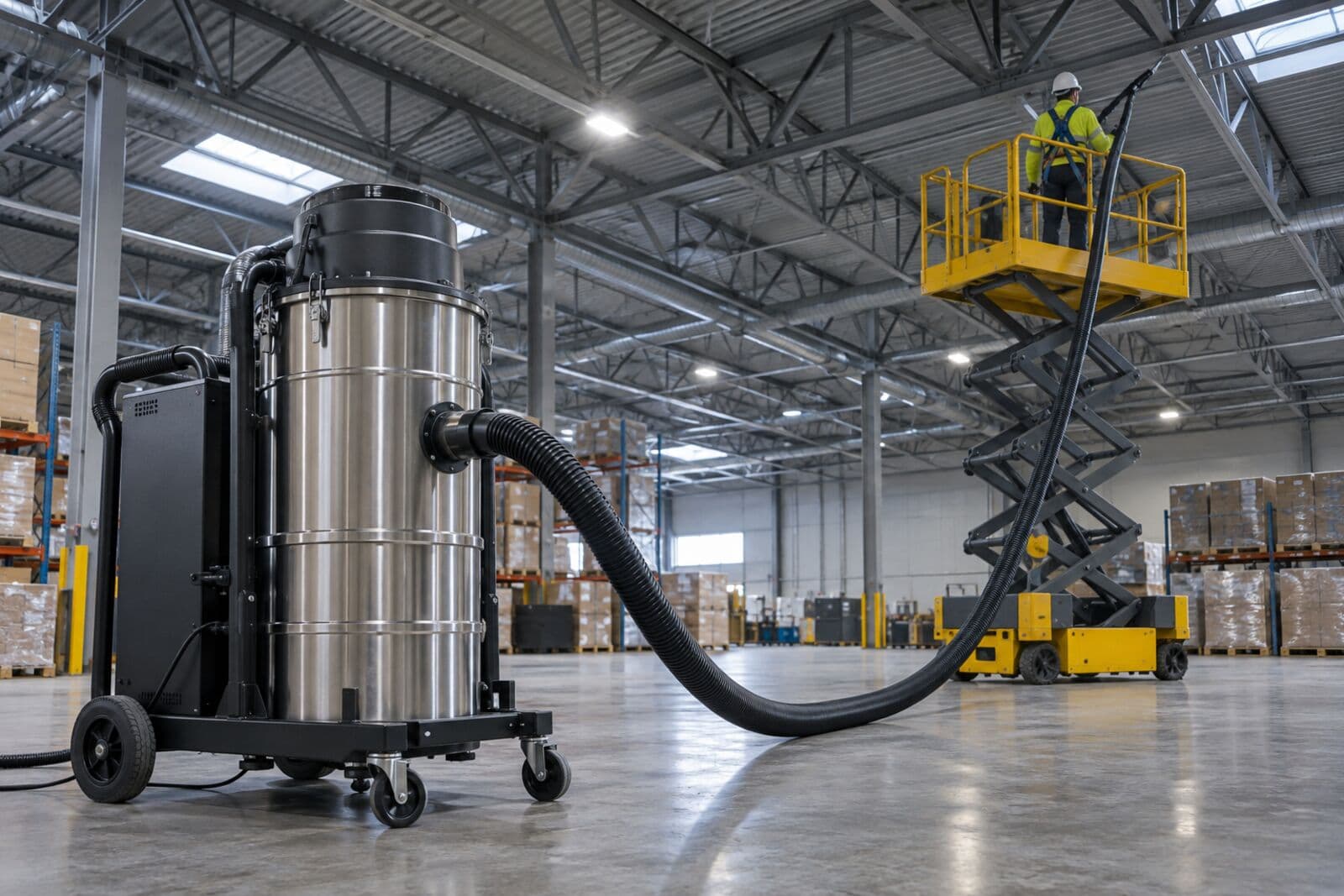
If your maintenance team is using compressed air to blow dust off equipment and overhead surfaces, you're not just creating a health hazard—you may be violating OSHA regulations.
OSHA's Position on Compressed Air
OSHA explicitly prohibits using compressed air for dust cleaning in most situations. According to OSHA guidance, compressed air can cause hazardous dust to become airborne and contribute to employee exposure.
Prohibited Methods:
- Compressed air for cleaning surfaces or equipment
- Dry brushing or sweeping of dust
- Blowing dust with fans or leaf blowers
- Any method that creates airborne dust clouds
Why Compressed Air Is Dangerous
When you blow dust with compressed air, you create several hazards:
1. Respiratory Exposure
Airborne dust particles can be inhaled by workers throughout the facility. For hazardous dusts like silica, metal particles, or organic materials, this creates serious health risks including lung disease.
2. Explosion Risk
Blowing combustible dust into the air creates an explosive atmosphere. If the dust concentration reaches the right level and encounters an ignition source, the result can be catastrophic.
3. Redistribution, Not Removal
Compressed air doesn't actually remove dust—it just moves it somewhere else. The dust eventually settles back onto surfaces, equipment, and products, often in harder-to-reach locations.
HEPA Vacuum Requirements
OSHA requires HEPA-filtered vacuums for dust removal in most industrial settings. A HEPA filter must be at least 99.97% efficient at capturing particles 0.3 micrometers in diameter.
HEPA Filtration Standards:
- Standard industrial vacuum: 99.00% filtration efficiency minimum
- HEPA vacuum: 99.97% filtration efficiency at 0.3 microns
- ULPA vacuum: 99.999% efficiency (for cleanroom applications)
Approved Cleaning Methods
For industrial dust removal, OSHA approves the following methods:
- HEPA vacuuming: The preferred method for most industrial dust removal
- Wet cleaning: Using water to suppress dust before removal
- Combination systems: Compressed air used with a HEPA-filtered capture hood (for specific applications)
Special Considerations for Combustible Dust
Facilities handling combustible materials need additional precautions. According to NFPA 652:
- Vacuums must be rated for combustible dust collection (explosion-proof or pneumatically powered)
- Anti-static hoses and non-sparking attachments are required
- Proper grounding and bonding must be maintained
- Collected dust must be disposed of properly
What the Equipment Should Do
Industrial HEPA vacuums built for overhead cleaning in warehouses and manufacturing facilities should:
- Meet or exceed OSHA HEPA filtration requirements (99.97% efficiency)
- Have long-reach attachments for 30+ foot ceilings
- Include anti-static components for combustible dust environments
- Capture dust at the source without creating airborne hazards
Stop using compressed air for dust removal. Contact Memphis High Dusting for compliant, effective overhead cleaning that protects your workers and keeps you in compliance.
Related Articles
Frequently Asked Questions
Why is compressed air prohibited for dust cleaning?
OSHA prohibits compressed air because it makes dust airborne, creating respiratory hazards and explosion risks. It also just redistributes dust rather than removing it.
What are HEPA vacuum filtration requirements?
OSHA requires HEPA filters to be at least 99.97% efficient at capturing particles 0.3 micrometers in diameter. Standard industrial vacuums must have minimum 99.00% filtration efficiency.
What cleaning methods does OSHA approve?
OSHA approves HEPA vacuuming (preferred method), wet cleaning with water to suppress dust, and combination systems using compressed air with HEPA-filtered capture hoods for specific applications.